Introduction: A New Era of Intelligence
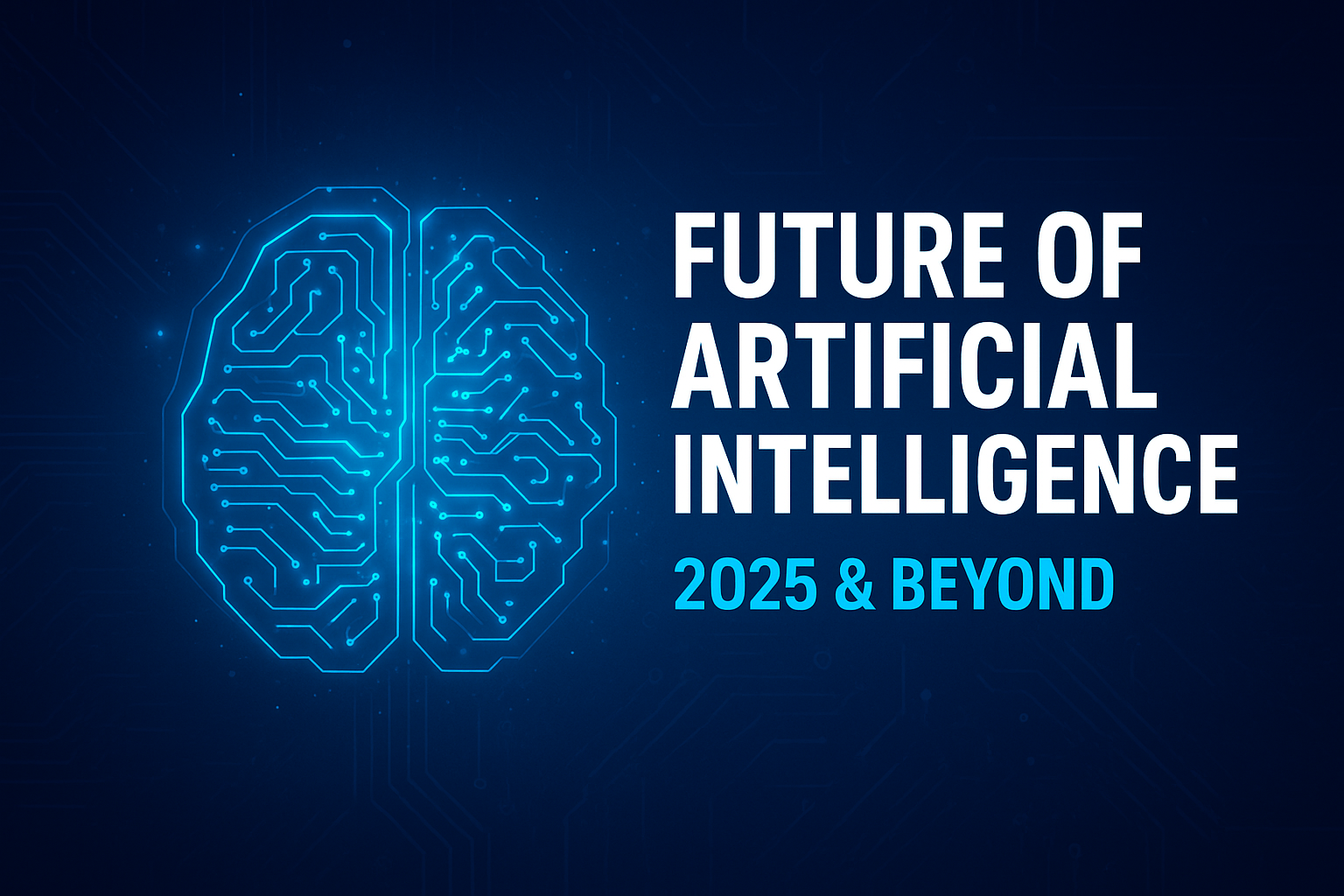
Artificial Intelligence (AI) is no longer just a futuristic concept—it is a powerful technology that is transforming the world faster than ever before. From self-driving cars to intelligent chatbots, personalized healthcare to automated business solutions, AI has become deeply integrated into our daily lives. As we move forward into 2025 and beyond, AI is expected to evolve even more rapidly, bringing new opportunities, changes, and challenges.
This blog explores the future of AI, its impact on industries, society, jobs, education, and the ethical issues that come with it. Whether you are a student, professional, or tech enthusiast, understanding the future of AI will prepare you for tomorrow’s world.
1. AI Will Transform Every Industry
AI will not be limited to just one or two sectors; it will reshape almost every industry. Here’s how:
✔ Healthcare
AI-powered tools will diagnose diseases faster and more accurately than humans. Personalized medicine will help treat patients based on their genetic patterns.
✔ Education
AI tutors will provide personalized learning, helping students study in a way that suits their pace and style.
✔ Finance
Banks will use AI for fraud detection, customer service, and smart investment decisions.
✔ Agriculture
Smart farming technologies will improve crop yield, predict weather patterns, and reduce waste.
✔ Transportation
Self-driving cars, AI traffic management, and automated logistics will make travel faster and safer.
2. Rise of Automation: The Future Workforce
One of the biggest questions about AI is:
What will happen to human jobs?
The truth is balanced:
- AI will automate repetitive and routine tasks.
- But AI will also create new categories of jobs, especially in tech, robotics, cybersecurity, and data science.
Jobs at Risk:
- Data entry
- Basic customer service
- Manual manufacturing
- Cashiers
- Simple administrative roles
New Jobs AI Will Create:
- AI engineers
- Data analysts
- Cybersecurity experts
- Robotics technicians
- AI ethics officers
- Machine learning trainers
So instead of reducing opportunities, AI will create more specialized and higher-paying jobs—if people learn the right skills.
3. AI and Human Collaboration
In the future, AI will not replace humans—it will work WITH humans.
This approach is called Human-AI Collaboration.
Examples:
- Doctors using AI tools to improve diagnosis
- Teachers using smart systems for personalized education
- Engineers using AI to optimize building designs
- Creators using AI to edit videos, write scripts, and design graphics
Humans will provide creativity, emotions, and decision-making.
AI will provide speed, accuracy, and data processing.
Together, they will create a highly productive work environment.
4. AI in Everyday Life: What Will Change?
By 2030, AI will be everywhere in our daily routine:
✔ Smart Homes
Homes will automatically control temperature, lighting, and security using AI.
✔ Virtual Assistants
AI assistants will handle scheduling, calls, payments, and even personal planning.
✔ Shopping
AI will recommend exactly what you want based on your preferences.
✔ Entertainment
Movies, games, and music will be personalized for every user using advanced AI algorithms.
AI will make life more comfortable, efficient, and connected.
5. Ethical Challenges of AI
With great power comes great responsibility.
The future of AI also brings ethical concerns:
Privacy Issues
AI collects huge amounts of data, which raises questions about how safe this information is.
Bias & Fairness
If AI learns from biased data, it can make unfair decisions.
Job Displacement
Some people may lose jobs if they do not upskill in time.
AI Misuse
Deepfakes, fake news, and cyberattacks may increase.
Solution? Responsible AI
Governments and organizations must create global rules to ensure AI is used safely and ethically.
6. The Future of AI in Pakistan
Pakistan is also entering the AI revolution.
In the next 5–10 years:
- AI jobs will increase rapidly
- Universities will introduce more AI-related degrees
- Government will adopt AI in health, education, and security
- Freelancers will earn more through AI-based skills
Students who learn AI skills early will have huge advantages in the job market.
7. Skills You Must Learn for the AI Future
To stay relevant in the future, here are the top skills:
- Python programming
- Machine learning
- Data science
- Cloud computing
- Cybersecurity
- Prompt engineering
- Robotics
- AI ethics
Learning these skills will make you future-proof.
Conclusion: The AI Future is Bright
The future of Artificial Intelligence is exciting, powerful, and full of opportunities. AI will make industries smarter, improve healthcare, transform education, and create millions of new jobs. But it must be used responsibly.
Those who adapt, learn, and grow with AI will lead the future.